 Free shipping to the contiguous US ·
 Easy 30-day returns
How to Mark Down Prices Fast for a Holiday Sale

Quick answer
To mark down prices for a holiday sale, decide the new price and the end date first, then relabel in price groups. Leave the old price visible and put the new one beside it, so shoppers can see the saving. Update the register at the same time as the tags, and take the sale labels off when the promotion ends.
This year, Black Friday is Friday, November 27, 2026, and Cyber Monday is November 30. Plenty of small US shops also run a sale across the Thanksgiving weekend. The steps below work for any of those windows.
Decide the markdown before you pick up a label
Write a short list before anyone starts sticking labels: which items or categories go on sale, the new price or the percent off, and the start and end date. Set a floor for each item so you do not cut below a price you can live with.
A floor is your cost, plus a little profit you still want, after any card fees. If a candle costs you $8 and you will not sell it for less than $12, then $12 is the floor. A “40% off” sign that would land at $10.80 should be rounded back up, or that item stays off the sale.
Round sale prices to numbers people can read in a second: $9, $12, $19.50, $24.99. And do not mark down things that would have sold at full price anyway. Aim the sale at seasonal stock, slower sellers and gift extras, not at your everyday bestsellers.
Keep every “was” price honest
A markdown only helps if the old price was real. In the United States, the FTC’s Guides Against Deceptive Pricing say a former price should be one you actually offered to the public, in good faith, for a reasonably substantial period. Raising a price in November so a holiday “sale” looks bigger is the classic example of a fake bargain.
This is not legal advice, and rules can vary by state. The practical habit is simple: keep a record of what you charged before the sale, and only strike through a price you really used. Regulars will notice a padded “was” price faster than a first-time visitor will.
Match the tag, the sign and the register
Holiday sales go wrong when the label says one thing and the till says another. Shoppers notice, and in many states inspectors check that item or shelf prices match what rings up.
Before you open on sale day:
- Change the prices in your register or point-of-sale system.
- Relabel the items, or put a clear sale sign on a whole display if every item shares one price.
- Scan a few items and compare the receipt with the tag.
- Write down who will take the sale labels off, and when.
When the sale ends, do those steps in reverse on the same day. A leftover “50% off” sign in December teaches people to ignore your signs.
The fastest way to relabel a shop
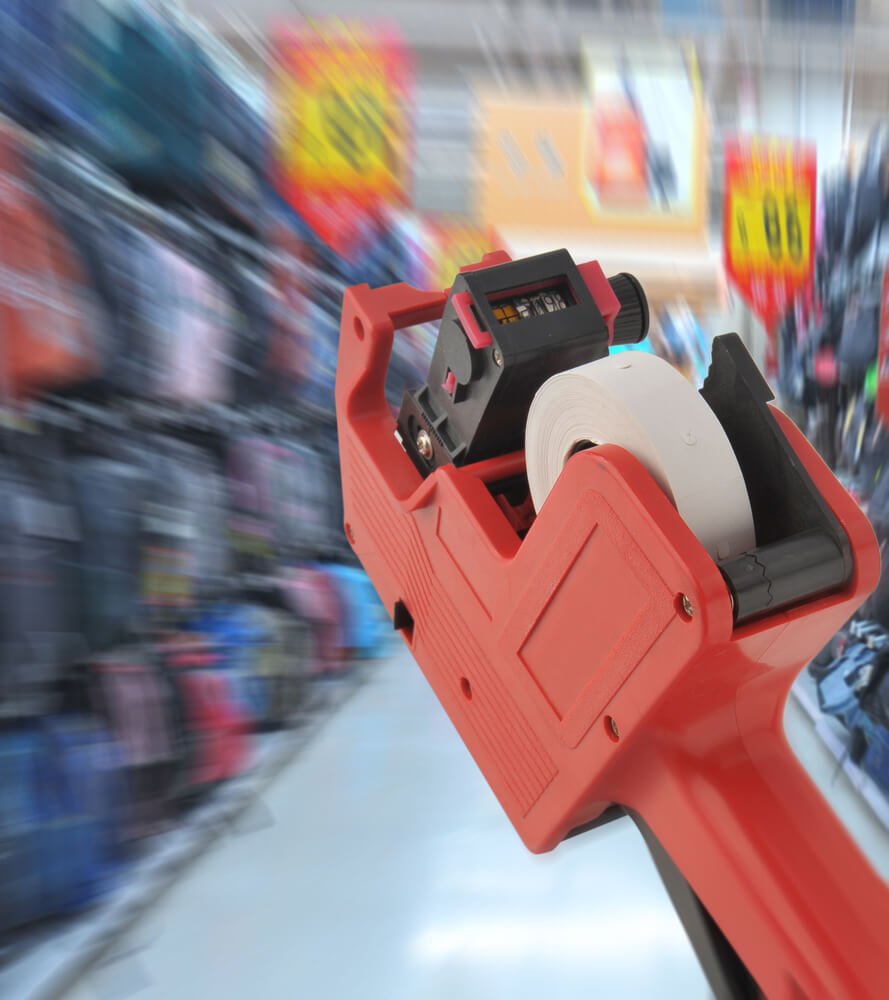
Handwriting new prices on old stickers looks messy, and it takes too long once you have more than a few dozen items. A handheld price gun prints a clean label and sticks it on with one squeeze.
The Easy Tag MX-5500EOS is a one-line, 8-digit price gun. It will not print a “was” price and a “now” price on the same label. That is fine for a holiday sale. Leave the original label in place, draw one clean line through it, and stick the new price beside it. Shoppers see both numbers, which is what you want. Our post on labeling tricks that lift impulse purchases explains why the old price should stay visible.
Work in this order:
- Group items by the new price, not by aisle. Each time you change the print wheels it takes a few seconds, so you want as few changes as you can manage.
- Set the gun to the first price and print a test label on scrap paper.
- Strike the old price and apply the new label beside it, in the same spot on every item, away from barcodes and artwork.
- Finish that whole price group before you change the wheels.
- Walk the floor once and catch anything you missed.
Our beginner’s guide to using a price gun walks through setting the wheels and loading a roll if you are new to the tool.
The red Easy Tag price gun kit is $19.99 on shopeasytag.com and is in stock. It ships with 5,000 white labels, three ink rollers (one installed and two spare) and a label scraper, with free shipping to the contiguous US. The scraper is useful when the sale ends and you need to lift labels off leftover stock. Two kits are $19.99 each, and three kits are $19.99 each, if more than one person is labeling at once.
White labels are right for everyday prices. For a sale, a bright sticker or a small sign in one consistent color helps shoppers spot the deals from the door. Keep that color only for genuine markdowns, or it stops meaning anything.
Use signs for whole tables, labels for single items
If a whole table is 25% off, one sign can cover it, and you may not need a new label on every unit. If prices vary, label each item so a shopper can pick something up and still know the price.
Print sale signs at 8.5 × 11 inches and slide them into a holder rather than taping paper to the wall. Easy Tag’s wall-mount acrylic sign holders are $13.99 for a 3-pack and are in stock, with adhesive strips in the box and no drilling. Change the sheet when the offer changes, and put a date on the sign, such as “Ends Sunday.”
A simple checklist for Black Friday week
If you are running a sale from Black Friday through Cyber Monday, or across the Thanksgiving weekend:
- By Wednesday, November 25: finish the markdown list, set the floors, and change nothing on the shelf yet.
- Thursday evening or early Friday: update the register, relabel, put the signs up, and scan a few test items.
- Each morning of the sale: walk the floor for missing or curled labels, and check that ended doorbusters are actually off the till.
- Tuesday, December 1: take sale labels and signs down, restore regular prices, and scan a few items again.
If your sale runs longer, keep the same start-and-end habit.
Common markdown mistakes
- Relabeling before the register is updated.
- Covering the old price completely, so the saving is invisible.
- Covering the barcode with the new label.
- Marking down items that were already going to sell at full price.
- Leaving sale signs up after the promotion ends.
Frequently asked questions
Do I need to put a new label on every item?
No. If a whole table or rack is one percentage off, a clear sign can cover it. Label each item when prices vary, or when shoppers will carry things away from the sign.
Should I cover the old price or leave it showing?
Leave it showing, with one clean line through it and the new price beside it. The old number is what makes the new number feel like a saving, as long as that old number was a price you really charged.
How far in advance should I relabel for Black Friday?
Set the plan a few days ahead, then relabel just before the sale starts, usually Thursday evening or early Friday. If you put sale prices out too early, the “was” price gets harder to defend, and early shoppers get the deal before you meant them to.
Can I use the same price gun after the sale to put regular prices back?
Yes. Set the wheels back to the regular price, lift the sale label with the scraper if you want a clean ticket, and print the everyday price again.