How to Price Clothing in a Boutique or Store
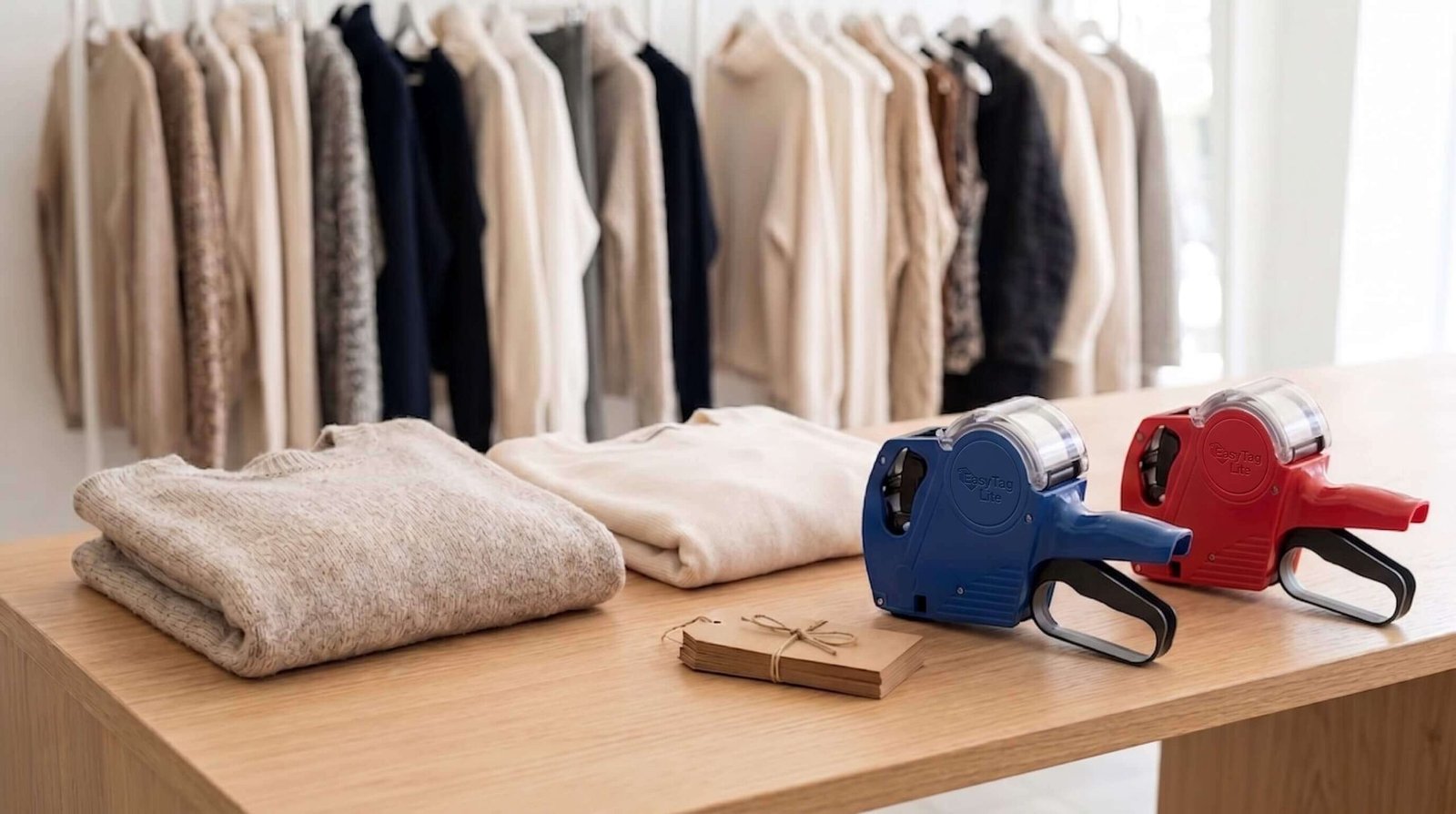
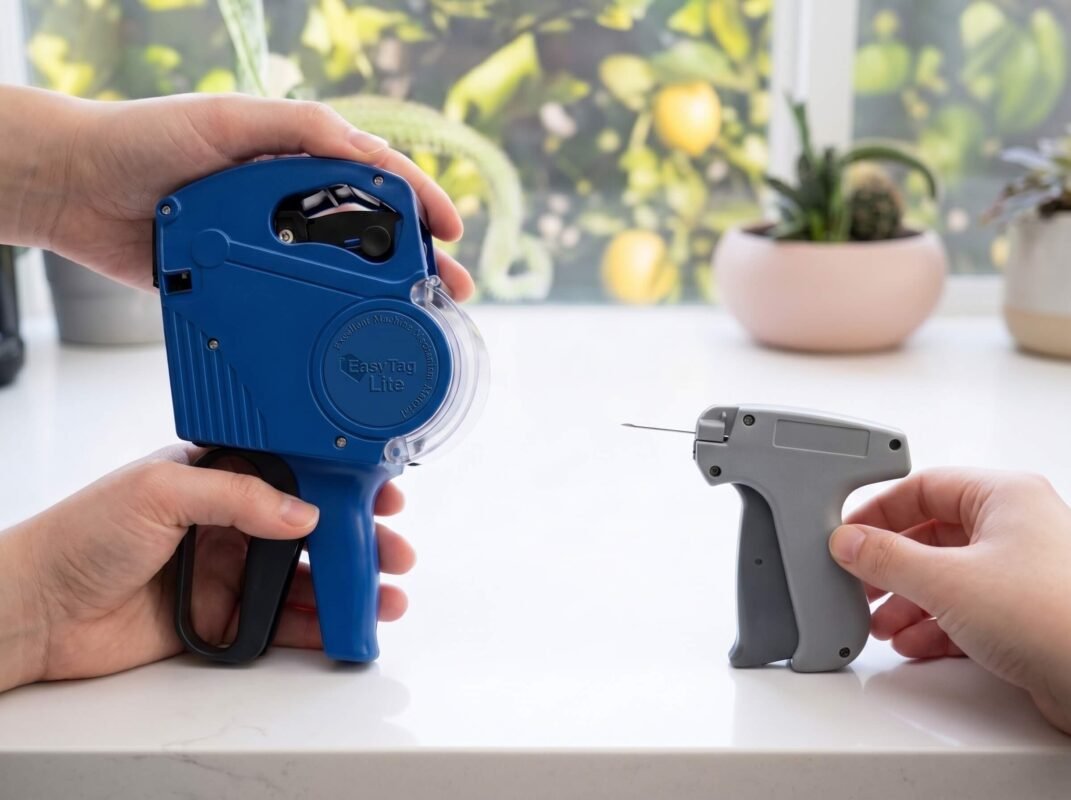
Search for a clothing price tag gun and you get two products that do completely different jobs. One prints a price onto a sticky label. The other pushes a plastic barb through fabric to hang a cardboard swing ticket. Buy the wrong one and the box sits in your stockroom while your new delivery stays unpriced.
This guide sorts the two apart in the first two minutes, then covers the part most articles skip: how to price a rail of stock without marking the garments, ruining a fitting room experience, or spending your whole Tuesday on it. If you already know you want a clothing price tag gun that prints labels, skip to the pricing routine further down.
The short version: if your stock arrives boxed, bagged, carded or already ticketed, a clothing price tag gun that prints sticky labels is the right tool. If your stock hangs loose on a rail, buy a barb gun for the swing tickets and use a clothing price tag gun to print the price onto those tickets.
Clothing Price Tag Gun Means Two Different Tools
The phrase covers both, and shopping listings rarely make the difference obvious.
1. The price label gun
You set a price on rotating print wheels, squeeze the trigger, and a printed sticky label peels off the front. You press it onto the item. This is the tool that shops use on boxed goods, shoe boxes, accessories, folded packaged garments and hangers.
Running costs are label rolls and ink rollers. Nothing is fired through the product, so nothing pierces the fabric.
2. The barb or needle tagging gun
A hollow needle pushes a small plastic fastener through the fabric or through a care label, joining a cardboard swing ticket to the garment. It prints nothing. You write or print the ticket separately.
Running costs are barb clips and replacement needles. It leaves a small hole where the needle passes through, which is why staff aim for the seam or the existing care label rather than the face of the garment.
Easy Tag sells the first type and does not currently stock the second. If you came looking for a clothing price tag gun because swing tickets need attaching to knitwear, you need a barb gun from a supplier who sells them. Saying so costs us a sale and saves you a return, which is the better trade for both of us.
Which Type Your Store Needs
Work from the garment, not from the tool.
A label gun fits when your stock is boxed, bagged, folded, packaged or hard surfaced. Shoe boxes, hosiery packs, belts on card, accessories, hats with an inner band, hangers, poly bagged items, gift sets and anything with a swing ticket already attached that needs a price added to it. A clothing price tag gun of this kind puts a clean printed price on the item in one squeeze.
A barb gun fits when the garment is loose knit, unpackaged and handled by customers. Sweaters, dresses on a rail, denim, coats and anything where a sticker would peel off in the fitting room or leave residue on the fabric.
Many shops run both. The barb gun handles the rail. The label gun prices everything else, plus the markdowns, the shelf edge, the stockroom boxes and the till side impulse rack. That is why pricing guns for clothing shops rarely means one gun. The barb gun handles the rail, and a clothing price tag gun does the higher volume work everywhere else.
How to Price a Delivery With a Label Gun
A rhythm beats speed. Work through a delivery in this order and a 200 piece drop takes one session rather than three.
Step 1: Decide what goes on the label before you print anything
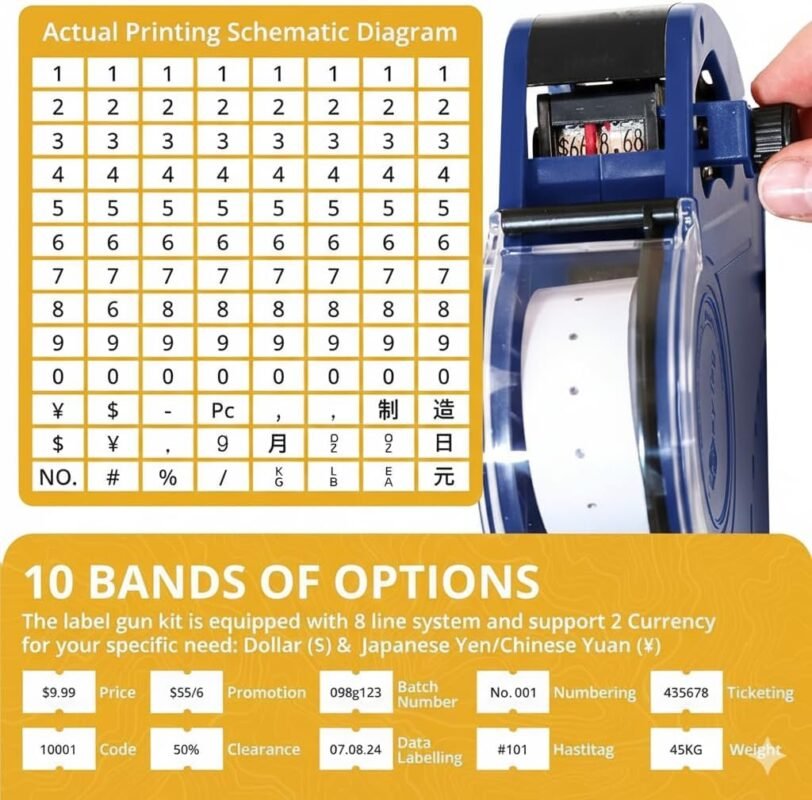
Eight print wheels give you more room than a price needs. Shops use the spare digits for a received date, a season code, or a short SKU that tells you at a glance whether an item has been sitting since spring.
Pick one format and write it on a card by the bench. Mixed formats across a season make markdown decisions guesswork later. A clothing price tag gun earns its keep on the second markdown, not the first pricing run, and only if the codes are consistent.
Step 2: Set the wheels and print a test label
Pull the adjustment knob out, slide to the wheel you want, turn to the character, push the knob back in. Print one label onto scrap paper before you touch stock. A wheel sitting one position off is hard to see on the gun and obvious on 90 mispriced garments. Every clothing price tag gun with rotating wheels has this failure mode, and a test label is the whole defence against it.
Step 3: Place the label where it will not damage the sale
Placement decides whether a clothing price tag gun leaves you a tidy shop or a sticker problem.
- Shoe boxes: the end panel that faces out on the shelf, never the lid where a stack hides it.
- Poly bagged garments: the bag, not the garment. The bag comes off at the point of sale.
- Existing swing tickets: the blank back of the ticket. This is the single most useful trick with a garment price tag gun, because the sticker never touches fabric.
- Hangers: the flat top of the hanger hook or the size marker, where staff can read a rail at a glance.
- Accessories on card: the card back, away from the barcode.
- Hat and belt inner bands: the manufacturer label, not the leather or the felt.
Step 4: Handle markdowns without a mess
Two schools of thought on markdowns with a clothing price tag gun, and both work if you commit to one.
Overlay: print the new price and stick it over the old label. Fast, and the customer sees a single clear price. Use this on card, boxes and swing tickets.
Strip and replace: lift the old label with a scraper, wipe the spot, apply the new one. Slower and cleaner. Use this when the surface shows through, on gloss packaging, and on anything customers photograph.
A clothing price tag gun makes a 60 item clearance rail a ten minute job instead of a morning of handwriting. That speed is the reason small shops keep one on the counter long after they buy a till system.
Fabrics and Surfaces Where Sticky Labels Fail
Be honest with yourself about where adhesive belongs. A label gun is the wrong answer on these.
- Knitwear and loose weave. The adhesive grabs fibres. It comes off with fluff attached and can pull the weave.
- Suede, leather and velvet. Adhesive marks the nap and leaves a visible patch.
- Silk and fine linings. Residue shows and the customer sees it under shop lights.
- Anything tried on repeatedly. A sticker survives a few fitting room trips and then ends up on the carpet.
- Damp or cold stock. A garment brought in from a cold van carries condensation, and standard adhesive will not grab a damp surface.
On those items, tag the garment with a barb gun and put your printed price on the swing ticket instead. The clothing price tag gun still does the printing. The ticket takes the adhesive instead of the garment, and you keep the speed of a garment pricing gun with none of the risk to the fabric.
What to Look For in a Clothing Price Tag Gun
Five things separate a clothing price tag gun you use for years from one that lives in a drawer.
- Digit count. Eight digits covers a price plus a date or a season code. Six digits fills up fast once you pass three figures.
- Line count. One line prints a single row. Two lines print two rows, which suits shops that want a date above the price.
- Label standard. MX-5500 compatible rolls are the most widely stocked one line size, so refills stay cheap and easy to find. Check this before you buy, because a proprietary label size is a running cost you cannot negotiate.
- What is in the box. A bare gun needs labels and ink before it prints a single price. Compare complete kits against bare guns on total cost.
- Spare ink rollers. Ink dries out. One roller and no spares means an emergency order the week you need it most.
Weight and trigger feel matter more than the spec sheet suggests. You will squeeze this thing several hundred times in one delivery session, so a clothing price tag gun that fights back is a gun your staff stop using.
The Easy Tag 5500EOS for Boutique Pricing
The Easy Tag 5500EOS in Blue is an 8 digit, one line price label gun in an MX-5500 style body. It ships at $24.99 with 5,000 white labels, 3 ink rollers and a label scraper for lifting old prices off boxes and card. The Easy Tag 5500EOS in Red is the same kit in red.
What it is: a clothing price tag gun for swing tickets, boxes, bags, card, hangers and packaging. Eight wheels of alphanumeric characters, so a season code or a received date fits alongside the price. Mechanical, so it works on the shop floor, in a stockroom, and at a weekend market with no power.
What it is not: a barb tagging gun. No clothing price tag gun of the label type will attach a swing ticket to a sweater. If that is your job today, buy a barb gun and come back for the labelling side.
Label size is 21mm x 12mm (0.83in x 0.47in), the MX-5500 industry standard, supplied as 10 rolls of 500. That footprint sits on a swing ticket or a shoe box end panel without covering the artwork underneath.
New to the mechanism? Our guide on how to load a price gun covers threading the roll, seating the backing holes on the sprocket teeth, and priming a fresh ink roller.
Colour matters more in a boutique than people expect, because the gun sits on the counter in front of customers. Easy Tag sells the 5500EOS in red and in blue, so you can match it to the till area rather than hide it in a drawer.
A Pricing Routine That Survives a Busy Week
Set the routine once and it holds when you are short staffed.
- Price at the bench, not on the floor. Unpack, check against the invoice, price, then move to the rail. Pricing on the shop floor doubles the handling.
- One person, one session. Two people pricing the same delivery produce two label formats and two placement habits.
- Keep the clothing price tag gun loaded. A gun with 40 labels left will run out mid delivery. Load a fresh roll before a big drop.
- Store spare ink sealed. A spare roller left loose in a warm drawer dries out and prints grey the day you need it.
- Log your code format. Tape a card to the bench showing what each digit position means.
Frequently Asked Questions
What is a clothing price tag gun?
The phrase covers two tools. A price label gun prints a price onto a sticky label and applies it to packaging, card or a swing ticket. A barb tagging gun pushes a plastic fastener through fabric to attach a cardboard swing ticket and prints nothing. Check which one a listing means before you order.
Can I put sticky price labels directly on clothes?
On packaged, bagged and boxed items, yes. On loose garments, no. Adhesive grabs fibres on knitwear, marks the nap on suede and velvet, and peels off during fitting room trips. Put the label on the swing ticket, the poly bag or the hanger instead.
Which pricing guns for clothing do boutiques use?
Most run two tools. A barb gun attaches swing tickets to garments on the rail, and a one line clothing price tag gun prices boxes, bags, accessories, hangers and clearance stock. The label gun does far more of the daily work than new owners expect.
How do I use a garment price tag gun on swing tickets?
Print the label and press it onto the blank back of the ticket. The sticker never touches the fabric, the price stays readable, and a markdown takes one squeeze and one overlay. This is the fastest legitimate way to price hanging stock with labels.
How many digits do I need for clothing prices?
Eight digits leaves room for a price plus a short code. If you use a received date or a season code for markdown decisions, six digits runs out fast, so buy an eight digit clothing price tag gun. The Easy Tag 5500EOS prints 8 digits on one line.
Do price labels come off without damaging the item?
On card, boxes, poly bags and gloss packaging, a scraper lifts most clothing price tag gun labels in one piece. Residue wipes off with a drop of rubbing alcohol on a cloth. Let the spot dry before you press a new label on, because damp surfaces cause edges to lift an hour later.
Can I print a date or a season code instead of a price?
Yes. All eight wheels carry alphanumeric characters, so a date, a batch code or a short SKU works the same way a price does. Many shops set the first digits as a received date and the last as the price.
What does the Easy Tag kit include?
One 8 digit, one line 5500EOS price gun, 5,000 white labels, 3 ink rollers and a label scraper, for $24.99. It takes standard MX-5500 compatible label rolls, so refills are widely available.
Price the Delivery, Not the Whole Afternoon
Sort the tool question first. If your stock hangs on a rail unpackaged, buy a barb gun for the swing tickets. If your stock arrives boxed, bagged, carded or already ticketed, a clothing price tag gun that prints labels does the job faster and leaves nothing behind on the fabric.
The Easy Tag 5500EOS in Blue and the Easy Tag 5500EOS in Red both ship at $24.99 with 5,000 labels and 3 ink rollers, which covers a small shop for a long stretch of deliveries and markdowns.